🐷 Are You Keeping Kosher On Your Vietname Trip?
Well, you might think you are. But most likely you’ve been drinking or eating pork products in Vietname without even knowing. Here’s a breakdown of the types of Vietnam coffee you should avoid if you’re keeping kosher in Vietnam, eating Halal, vegan, or vegetarian. I was shocked to learn this (and disappointed because I love coffee)! I hope it helps
Traditionally, in Vietnam:
- Robusta beans (stronger, more bitter than Arabica) are often used.
- During roasting, lard (pork fat), butter, salt, or vanilla might be added.
- This technique helps create the signature thick, caramelized, slightly oily taste.
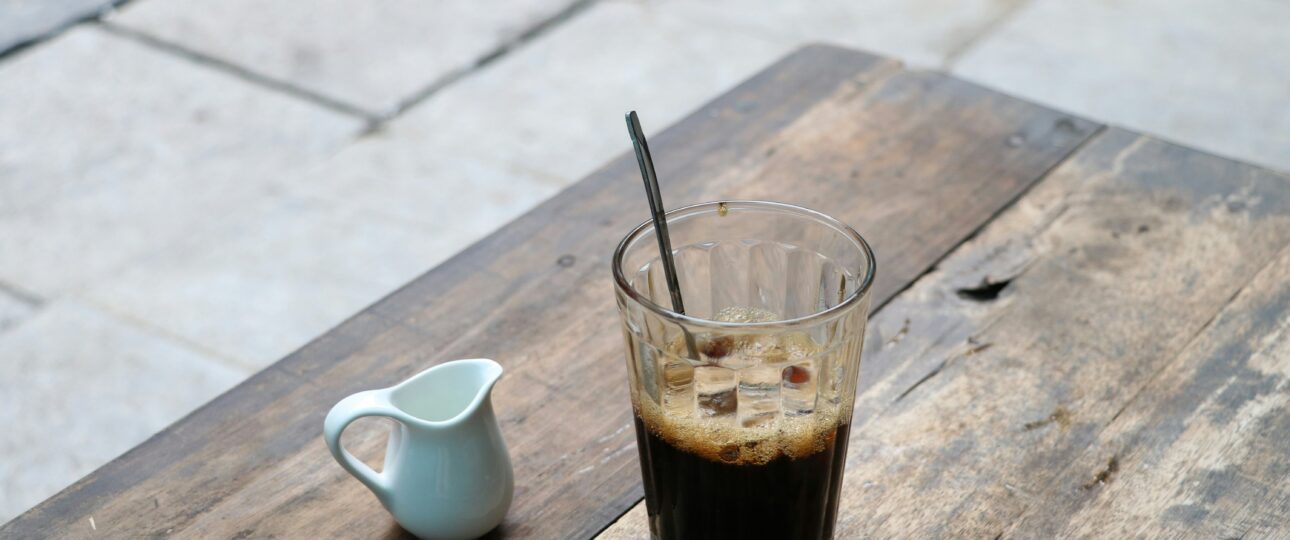
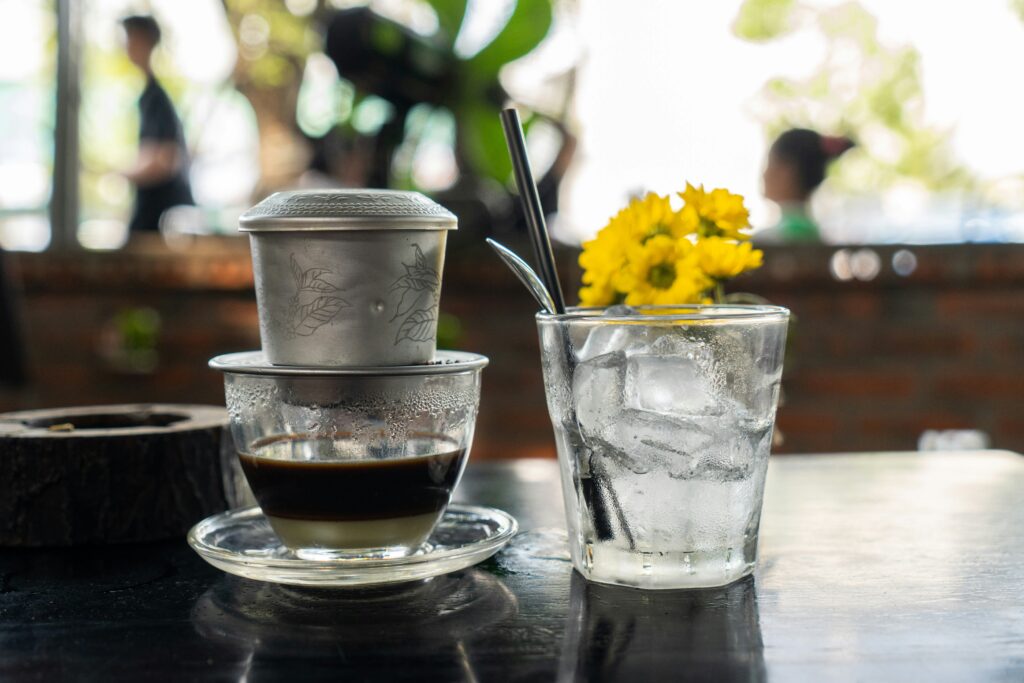
- T=In Vietnam coffee the beans are often very dark roasted and then brewed with a phin filter, served with condensed milk (ca phe sua da).
👉 This practice is more common among local, traditional roasters — particularly smaller family-run operations. It is not usually disclosed on the label unless you’re buying from an upscale, modern, or export-focused brand.
🌍 Is This Only in Vietnam?
Mostly yes. This roasting style is unique to Vietnam, though:
- Some specialty Asian roasters (like in Thailand or Laos) may use similar old-school techniques, but pork fat in roasting is almost uniquely Vietnamese.
- In most of the world, coffee is roasted dry, with no added fats — just heat and airflow.
☕ Do Big Brands (like Starbucks or Trung Nguyên) Use Animal Fat?
- Starbucks Vietnam Coffee: No — it follows the same international standards as elsewhere: 100% Arabica, no animal fat, no additives during roasting.
- Trung Nguyên: Some of their traditional blends do use butter or oils (not always pork), while others are clearly labeled “clean” or international-friendly. Kosher labeling is uncommon, though.
🕍 For Jewish Travelers:
Keeping Kosher in Vietname
🔹 Key Points for Kosher-Aware Travelers:
- Many local Vietnamese coffees may not be kosher due to pork fat or butter in the roasting process.
- There is no labeling law requiring roast ingredients in most places.
- If you keep kosher (or are vegetarian/vegan), look for international brands, specialty third-wave cafés, or imported beans.
- You can enjoy black drip coffee (ca phe den) or egg coffee at upscale cafés, but always ask about the beans.
- Assume that any traditional Vietnam coffee (especially “cà phê sữa đá”) served at a small or local café is likely non-kosher due to the roast.
- In modern cafés, there’s a much better chance the beans are clean-roasted (no animal fat), but always ask.
- Most restaurants and cafés won’t label this, and may not know the full roasting process unless they source from transparent, high-end roasters.
IS all of this news to you? Did you know? Let me know your thoughts in the comments.
